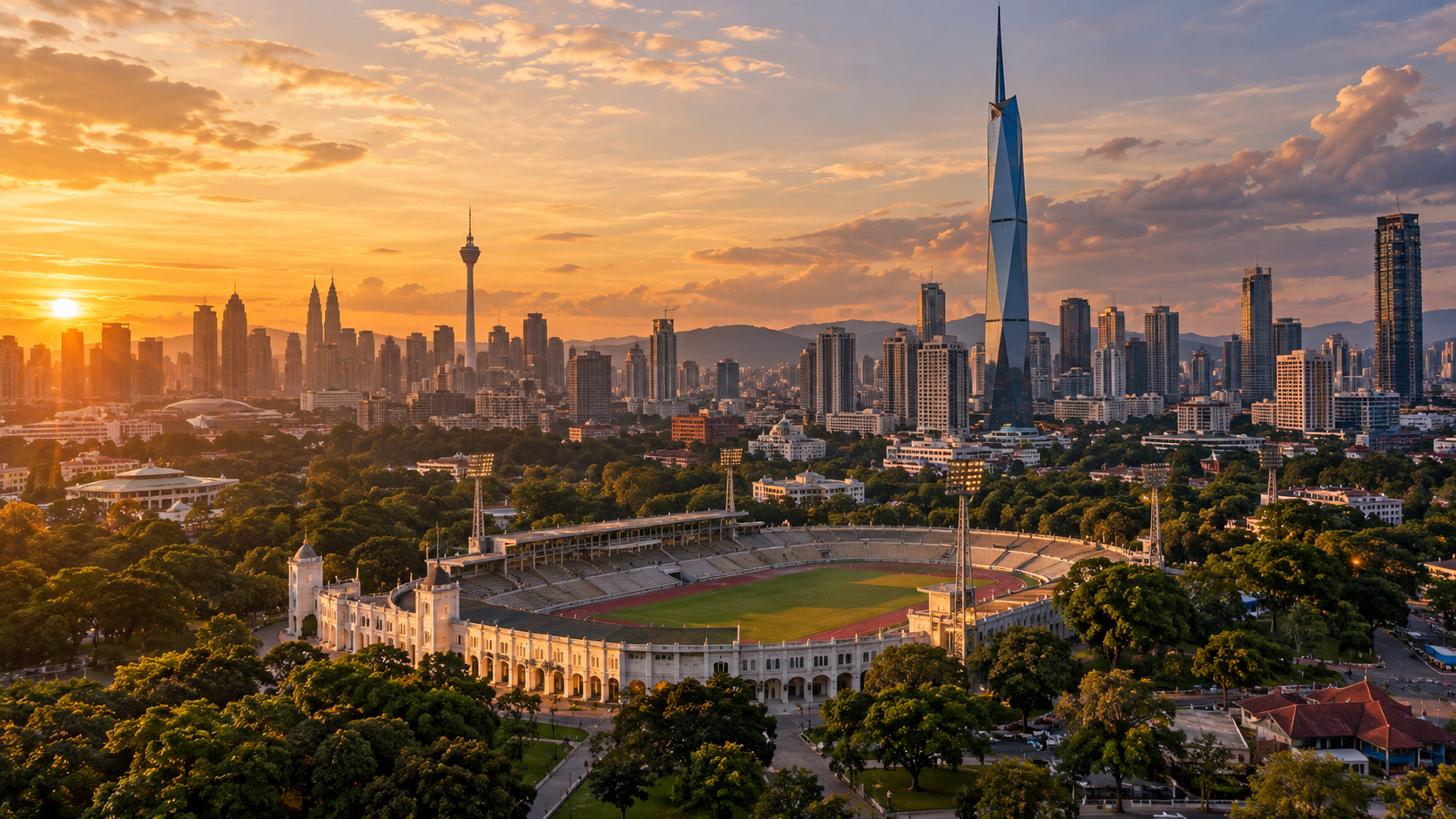




Malaysia’s development has given us extraordinary landmarks, infrastructure and economic opportunities. From the PETRONAS Twin Towers and KL International Airport to our major bridges, highways and the recently completed Merdeka 118, these developments represent our ambition, engineering capabilities and determination to progress.
But there is another side to development that deserves equally serious attention.
In our pursuit of progress, are we sufficiently considering what we might lose along the way?
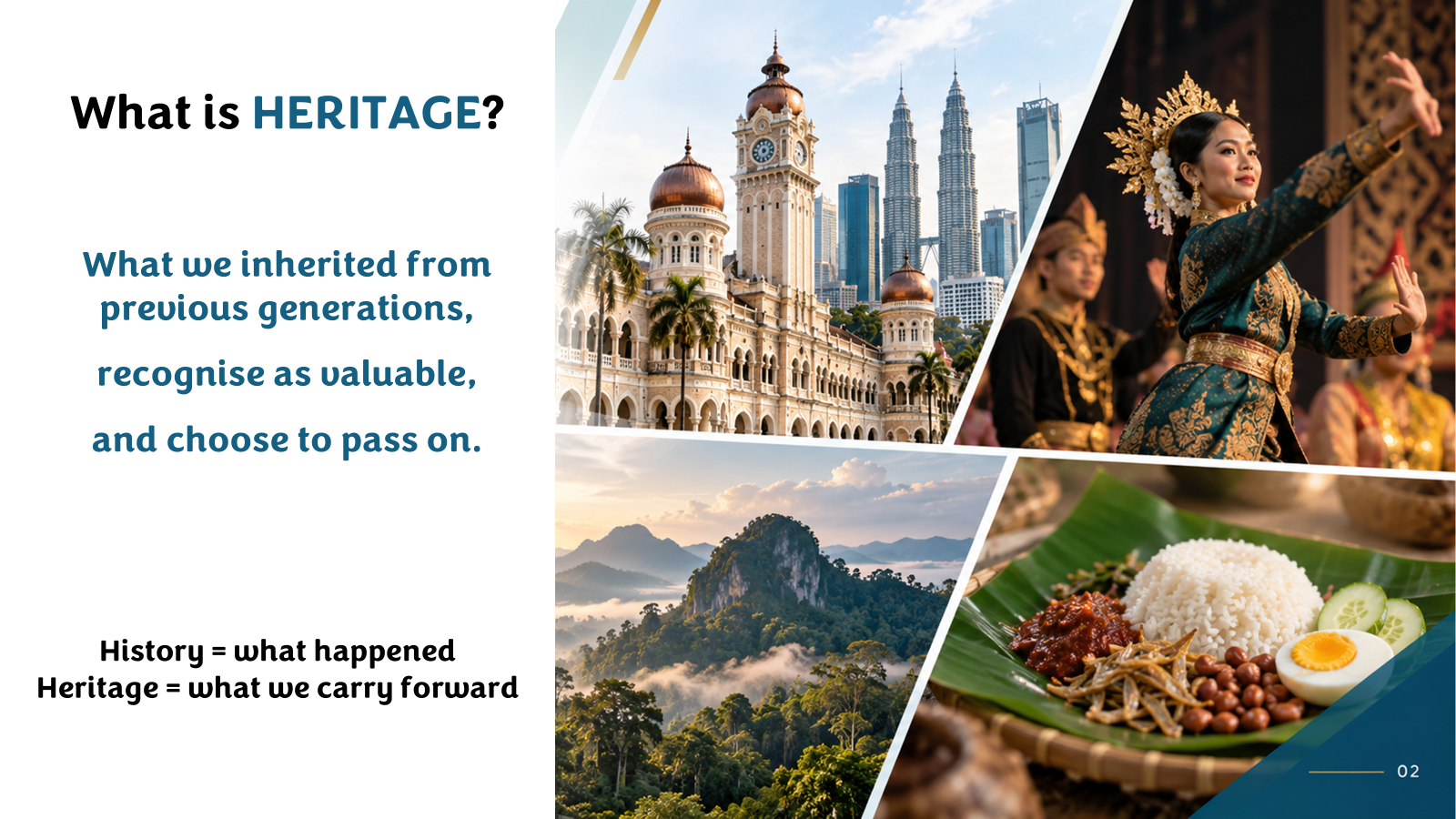
Heritage Is More Than Old Buildings
Heritage is what we inherit from previous generations, recognise as valuable, and choose to pass on to future generations.
History is what happened. Heritage is what we carry forward.
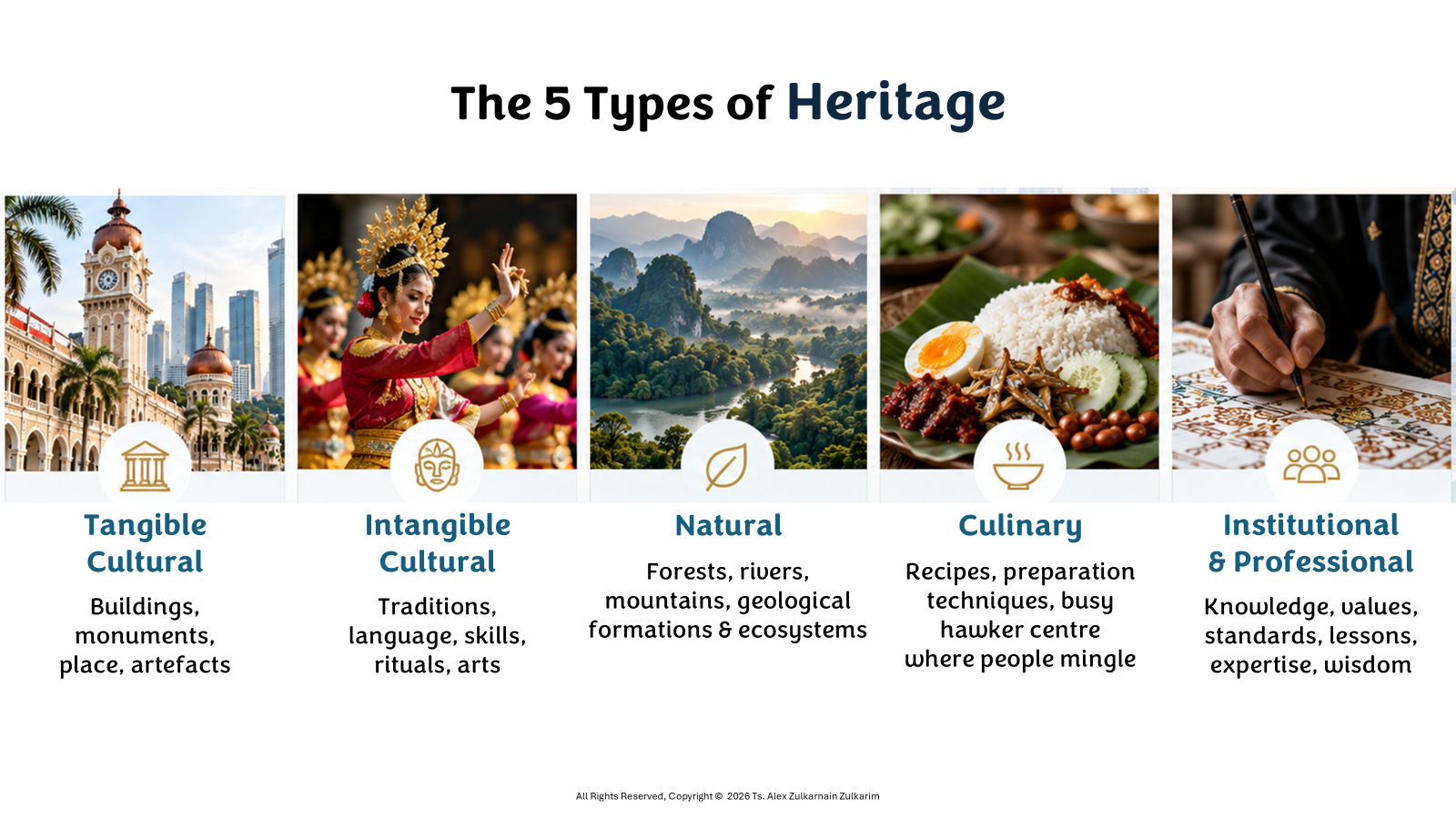
It is easy to associate heritage with historical buildings and monuments. In reality, heritage can be considered through five broad perspectives.
Tangible Cultural Heritage includes historical buildings, monuments, artefacts and places of historical significance. Intangible Cultural Heritage encompasses traditions, languages, rituals, arts and skills passed down through generations.
Natural Heritage covers forests, mountains, rivers, geological formations and ecosystems. Culinary Heritage includes traditional recipes, food preparation techniques and the food cultures that bring communities together.
Equally important is Institutional and Professional Heritage, comprising accumulated knowledge, professional standards, lessons learnt, values, expertise and wisdom developed over generations.
These five perspectives remind us that heritage is not simply about preserving physical structures. It is also about protecting our identity, knowledge, environment and way of life.
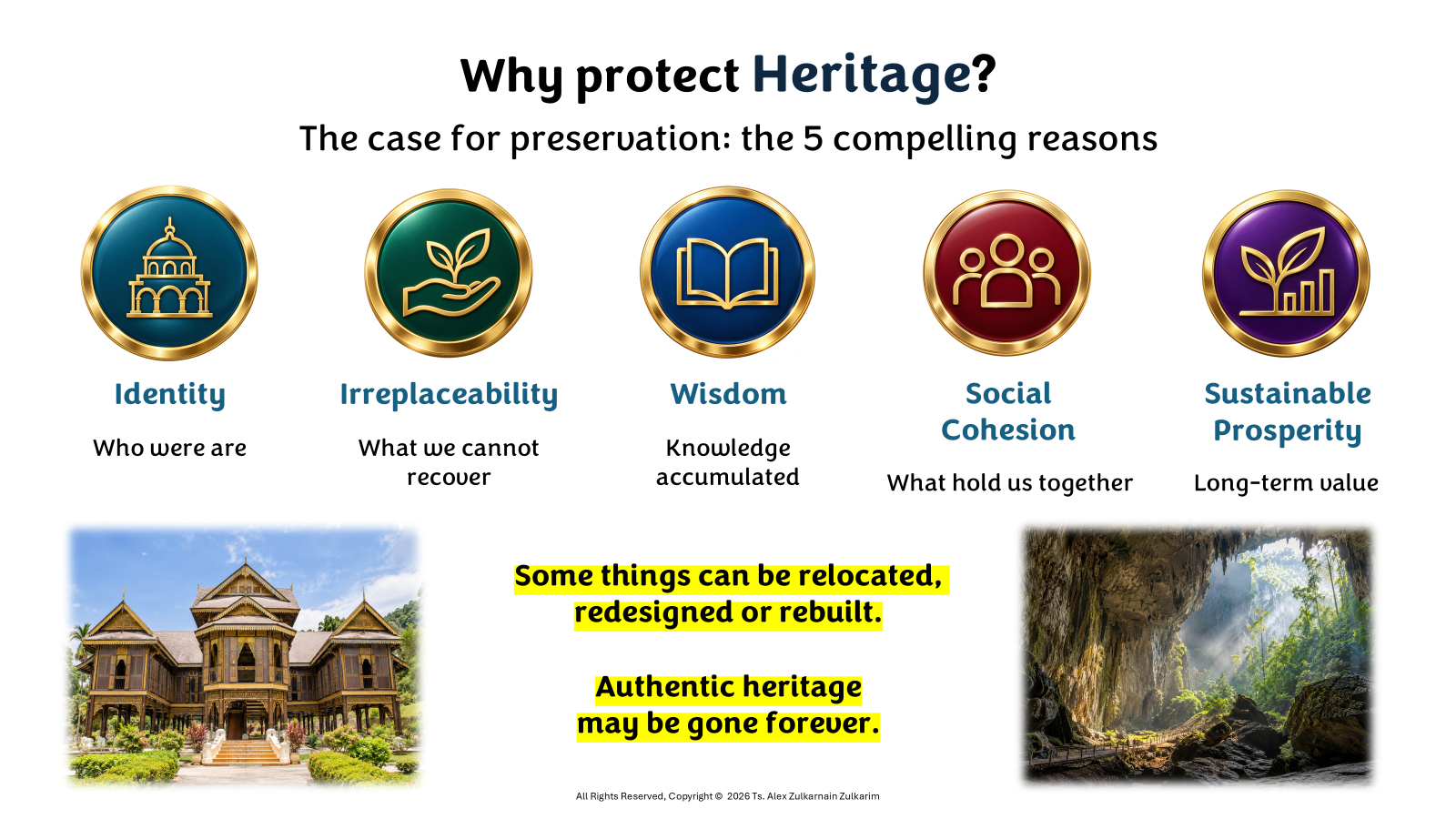
Five Compelling Reasons to Protect Heritage
Why should heritage sometimes take precedence over development?
First is Identity. Heritage tells us who we are, where we came from and what distinguishes our society from others.
Second is Irreplaceability. Some things can be relocated, redesigned or rebuilt. But once authentic heritage is destroyed, it may be gone forever.
Third is Wisdom. Traditional knowledge, craftsmanship and accumulated experience may contain valuable lessons that modern practices have yet to fully appreciate.
Fourth is Social Cohesion. Heritage connects communities, generations and cultures. It contributes to our collective sense of belonging.
Finally, Sustainable Prosperity. Well-preserved heritage can continue generating cultural, social, environmental and economic value for generations, including through tourism, creative industries and community activities.
The fundamental concern is that not every loss can be reversed, and not everything valuable can be measured in monetary terms.
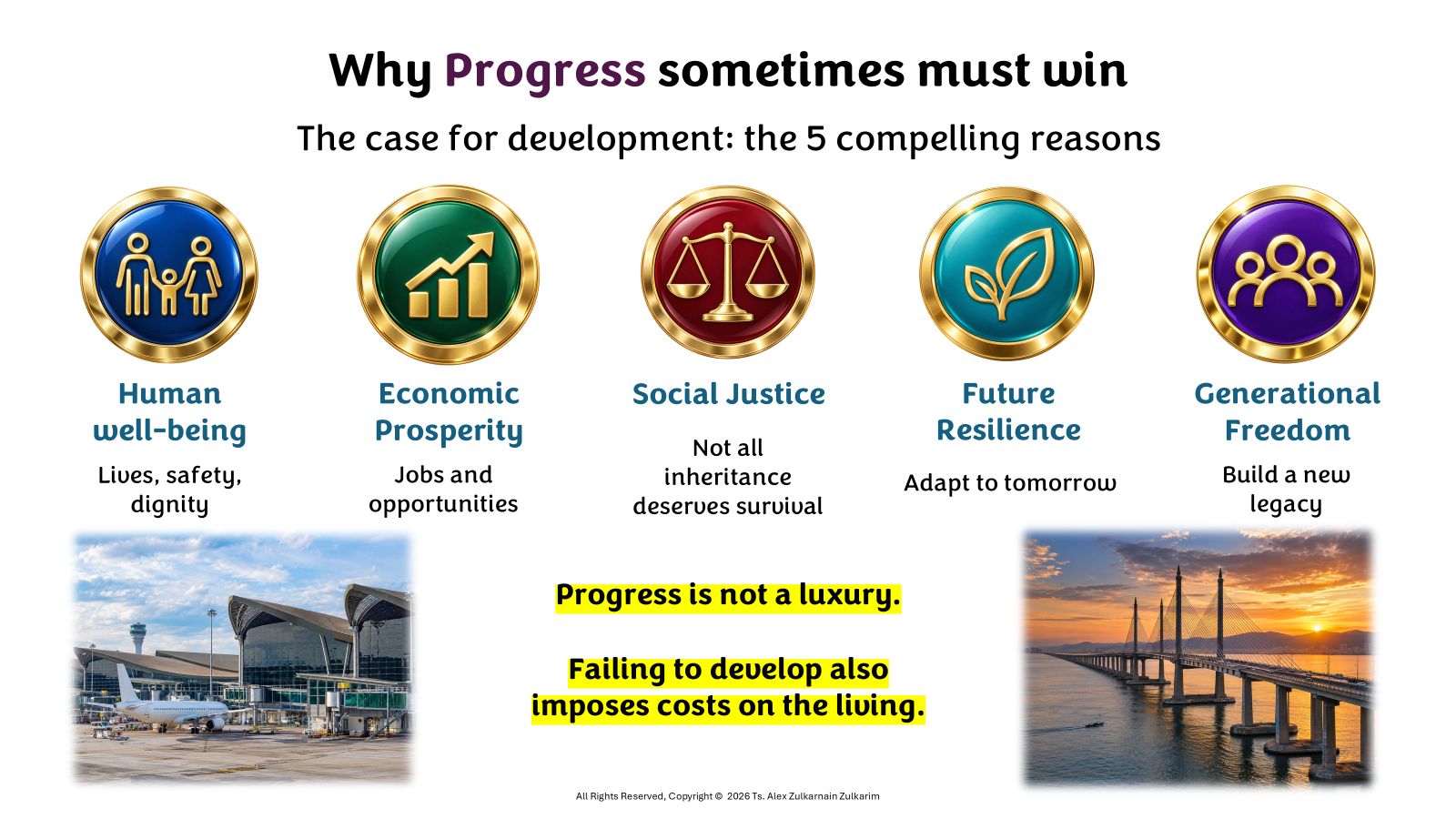
Five Compelling Reasons Why Progress Sometimes Must Win
Yet, preserving heritage at all costs is not necessarily the right answer either.
Human Well-being must remain a priority. Development provides better healthcare, housing, infrastructure, safety and improved living conditions.
Economic Prosperity creates employment, attracts investment, improves productivity and opens opportunities for future generations.
Social Justice also matters. Not everything inherited from the past deserves to survive, particularly outdated practices or institutions that perpetuate inequality and injustice.
Future Resilience requires societies to adapt to climate change, technological advancements, population growth and evolving needs.
Finally, Generational Freedom. Every generation deserves the opportunity to innovate, develop and create its own legacy rather than being permanently constrained by decisions made in the past.
Progress is not a luxury. Failing to develop also imposes costs on the living and on future generations.
The challenge, therefore, is not simply deciding which side should win. It is finding better ways to accommodate both.
Singapore: Balance Through Better Planning
Singapore offers an interesting example of how thoughtful planning can accommodate development and preservation.
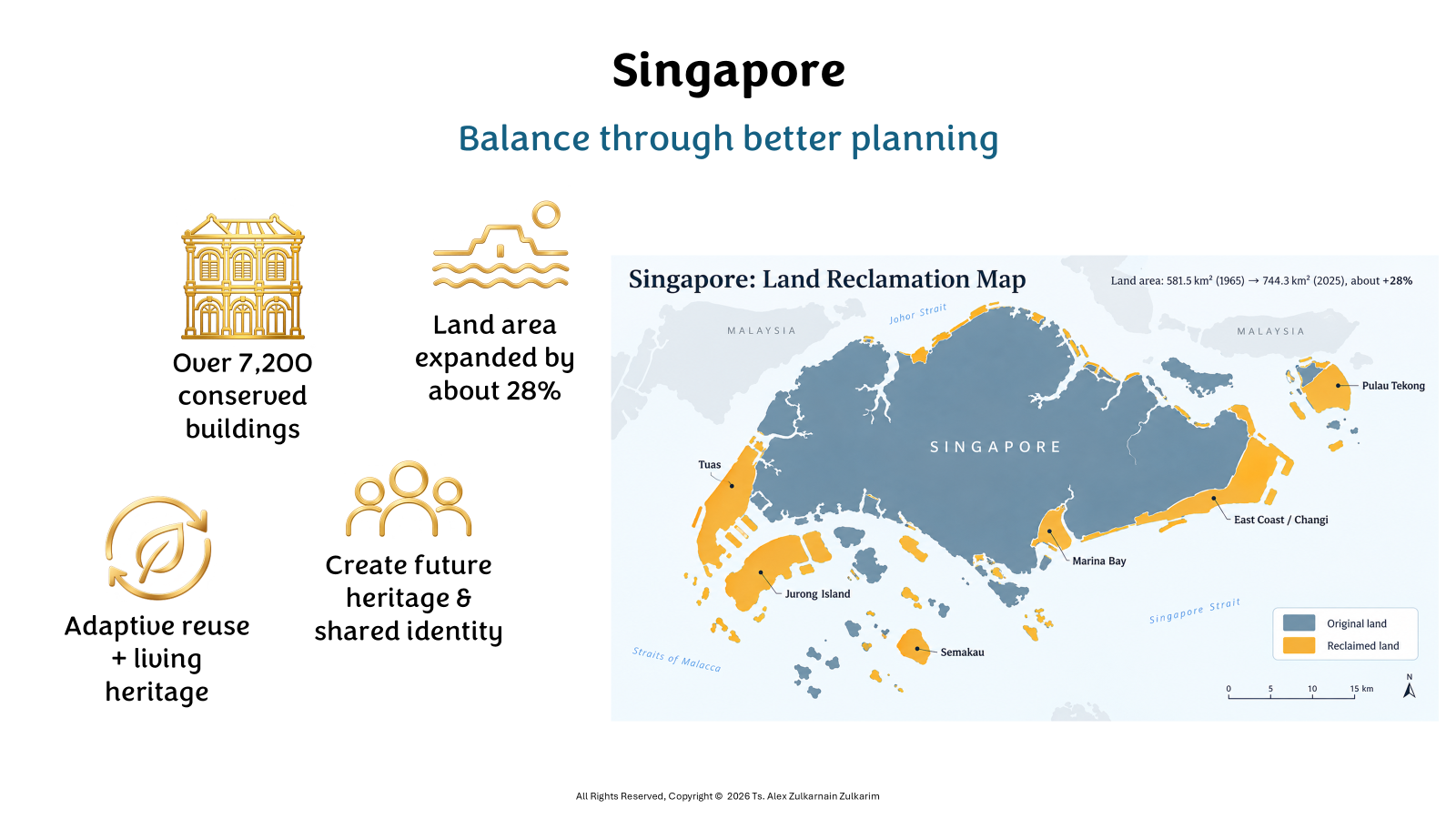
Despite its limited geographical size, Singapore expanded its land area from approximately 581.5 km² in 1965 to 744.3 km² in 2025, an increase of about 28%, largely through land reclamation.
At the same time, it has conserved over 7,200 buildings and structures, including significant historical districts and landmarks.
Singapore’s approach goes beyond preserving buildings.
Through Adaptive Reuse, historically significant buildings are given new functions. The former Supreme Court and City Hall, for example, were transformed into the National Gallery Singapore. Historic shophouses continue serving modern commercial and cultural purposes.
Through Living Heritage, traditions, craftsmanship, food culture and community practices continue to be celebrated and passed on. Singapore’s hawker culture is a particularly interesting example.
But Singapore also recognises the importance of Creating Future Heritage. Modern landmarks such as the Merlion, Marina Bay Sands and Gardens by the Bay have become symbols of its transformation and may form part of the heritage inherited by future generations.
Alongside this is the deliberate cultivation of a Shared Identity, through national traditions, multicultural neighbourhoods, public spaces and common experiences that help strengthen social cohesion.
Singapore has certainly faced its own difficult trade-offs, including environmental concerns associated with reclamation. Nevertheless, its experience demonstrates an important principle:
Better planning can create alternatives where development and preservation might otherwise appear to be competing objectives.
Malaysia’s Own Example: Merdeka 118 and Stadium Merdeka
Closer to home, the Merdeka 118 precinct provides another compelling illustration.
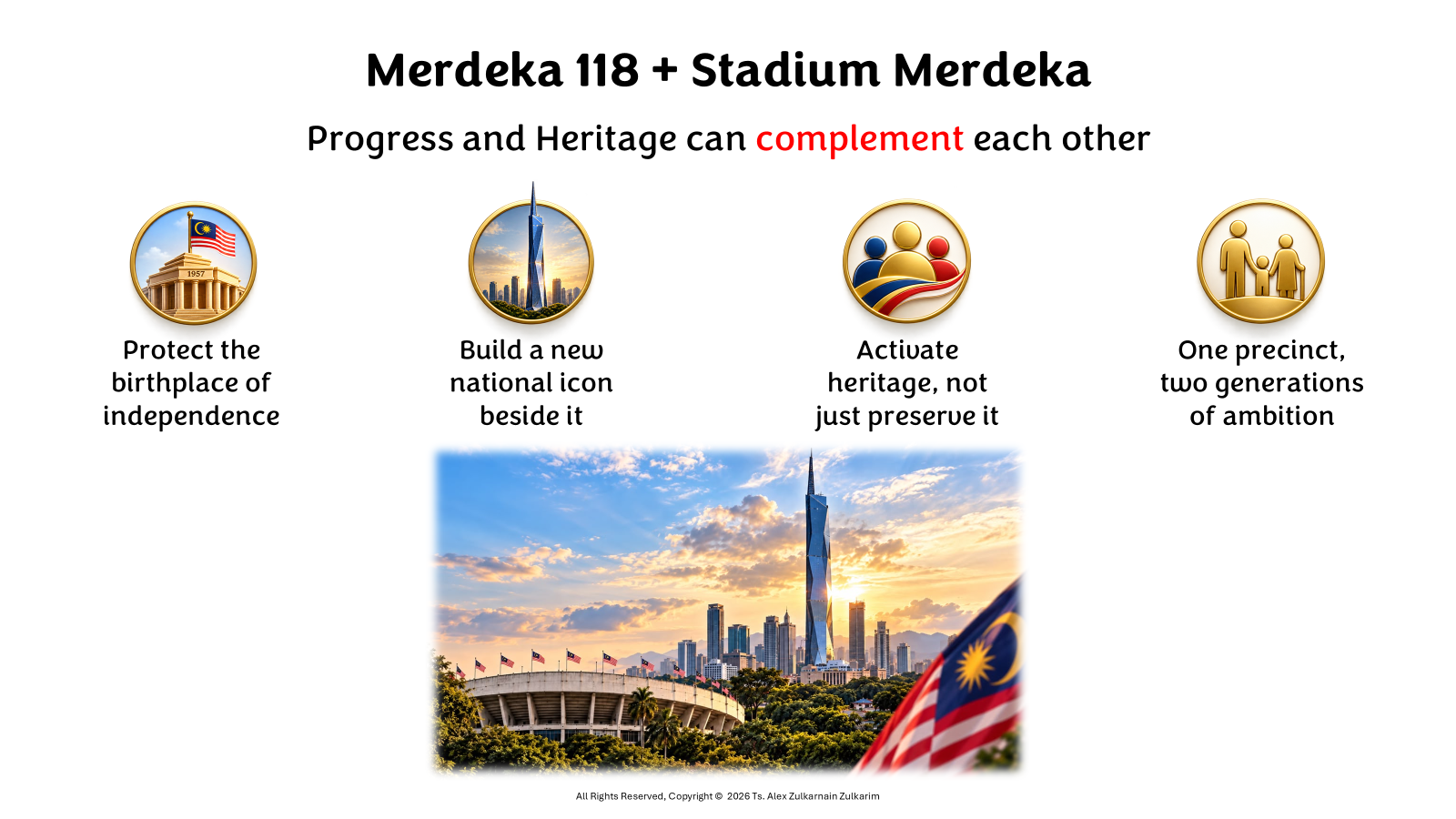
Stadium Merdeka, where our nation’s independence was proclaimed on 31 August 1957, is an irreplaceable part of Malaysian history.
Rather than demolishing it, the historic stadium was preserved and restored.
Alongside it now stands Merdeka 118, a striking modern development representing Malaysia’s progress and aspirations.
The precinct brings together four important ideas: protecting the birthplace of independence, building a new national icon, activating heritage rather than merely preserving it, and allowing two generations of national ambition to coexist within one precinct.
Stadium Merdeka reminds us of where our independent nation began. Merdeka 118 represents how far that nation has progressed.
This is not about replacing the past. It is about allowing the past and future to complement each other.
Are We Building the Right Projects?
For project leaders, the discussion ultimately comes down to the quality of our decisions.
We often measure project success through cost, schedule, quality and the achievement of defined deliverables. These are important, but they do not necessarily tell the complete story.
What about long-term outcomes, unintended consequences, environmental impacts, cultural losses and the legacy we leave behind?
A project may be delivered exceptionally well and still turn out to have been the wrong project to pursue.
This is why responsible project governance must challenge assumptions, evaluate alternatives, recognise competing stakeholder interests and consider long-term value before committing to major investments.
We should be Pro-Progress and Pro-Heritage. But more importantly, we must be Pro-Evidence, Pro-Options and Pro-Responsible Project Governance.
After all, what we build today may become what our grandchildren will fight to preserve tomorrow.
Engineering tells us what we CAN build. Responsible project governance must help us determine what we SHOULD build.
The IEM PMTD Sharing Session
This subject was presented by PXP’s Managing Director/CEO, Ts. Alex Zulkarnain Zulkarim, during an invited online talk organised by the Project Management Technical Division (PMTD) of The Institution of Engineers, Malaysia (IEM), on 17 October 2026. The thought-provoking session generated meaningful discussions, engaging questions and encouraging feedback from participating professionals. PXP extends its appreciation to IEM PMTD and everyone involved in the session.