


Project Management is not purely analytical.
Neither is it purely intuitive.
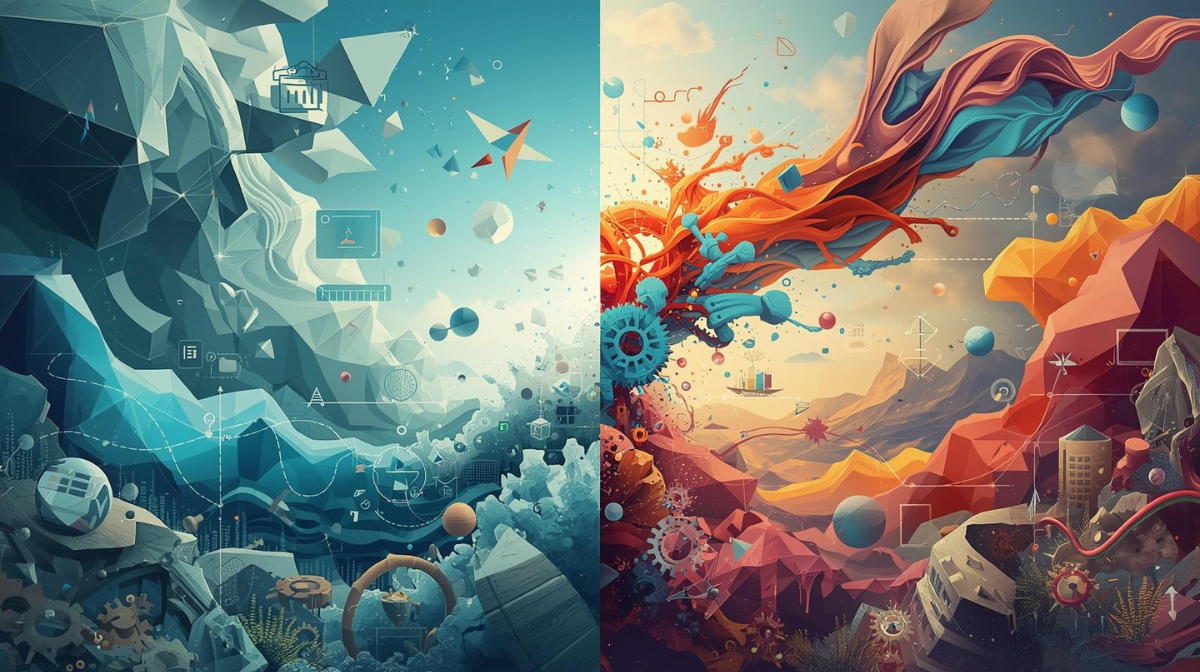
It is the fusion of Science and Art.
Science gives us structure.
Art gives us judgement.
Science builds the plan.
Art makes the plan survive reality.
The most effective Project Sponsors, Directors, and Managers operate comfortably in both worlds.
THE SCIENCE OF PROJECT MANAGEMENT
Logic. Systems. Repeatability. Control.
1. Scope Definition & Decomposition
Clear requirements, WBS structures, deliverable breakdowns.
If scope is fuzzy, everything downstream becomes expensive.
2. Planning & Scheduling
Network logic, critical path, resource loading, milestones.
Time is math and surely not optimism.
3. Cost Engineering & Budget Control
Estimating techniques, cost baselines, Earned Value Management, forecasting.
Cash flow tells the truth faster than status reports.
4. Risk & Uncertainty Analysis
Risk registers, probability-impact models, simulations.
Hope is not a strategy. Quantification is.
5. Governance & Stage Gates
Structured reviews, approvals, and checkpoints.
Good governance prevents heroic firefighting later.
6. Quality & Compliance Management
Standards, audits, specifications, acceptance criteria.
“Done” must mean the same thing to everyone.
7. Data & Performance Analytics
KPIs, dashboards, trends, leading indicators.
What gets measured gets managed.
8. Methodology & Process Architecture
PM frameworks, SOPs, and templates.
Consistency enables scalability across portfolios.
These scientific elements give us control.
THE ART OF PROJECT MANAGEMENT
Judgement. Influence. Leadership. Adaptability.
1. Stakeholder Influence & Negotiation
Aligning interests, managing politics, winning buy-in.
Projects succeed when people say yes, not when documents say approved.
2. Leadership Presence
Calm under pressure, decisiveness, credibility.
The team mirrors the leader’s emotional state.
3. Communication Mastery
Storytelling, clarity, listening, simplifying complexity.
A brilliant plan poorly explained is still a bad plan.
4. Conflict Resolution
Managing disagreements constructively.
Unresolved friction silently kills performance.
5. Situational Judgement
Knowing when to follow process and when to bend it.
Experience teaches what no template can.
6. Team Motivation & Culture Building
Trust, ownership, and psychological safety.
High-performing teams outperform high IQs.
7. Creativity & Problem Solving
Finding options when constraints tighten.
Every project hits a wall. Art finds the door.
8. Strategic Thinking
Connecting project outcomes to business value.
Delivering outputs is tactical. Delivering impact is leadership.
WHERE SCIENCE MEETS ART
Real project excellence happens at the intersection:
• Risk analysis plus stakeholder persuasion
• Schedule logic plus smart trade-offs
• Governance discipline plus leadership courage
Too much science creates bureaucracy.
Too much art creates chaos.
Right balance creates performance.
THE PXP PERSPECTIVE
At PXP, our training and consultancy approach intentionally develops both dimensions. Structured tools and methodologies alongside leadership judgement, behavioural intelligence, and practical decision-making under uncertainty.
FINAL THOUGHT
Anyone can learn the science.
Only experience sharpens the art.
Master both, and you don’t just manage projects. You deliver outcomes that matter. That is Project Xcellence.